Welcome to a sustainable future, welcome to Kenergy Wind

Its the Cleanest energy you will ever invest in

Panchabuta-Renewable Energy & Cleantech in India

environmentalresearchweb: News

Sunday, May 15, 2011

Lead by example


According to a news article in the bengali daily , AnandaBazaarPatrika, Bihar Chief Minister, Nitish Kumar will introduce solar panel in his own residential office. Most of the day to day eletrical appliances will be using electricity generated from the solar panels. With the state suffering acute power shortage and with not short-term solution to increase power supply to the state, the Bihar government is taking steps to encourage power production from unconventional sources.
Moreover, some of the NGOs in Bihar have also proposed of turn Bihar into the hub for manufacturing of solar panels which will aid in generating employment. 

Monday, April 11, 2011


Fuel from Chicken Feathers?

March 22nd, 2010 -
Chicken FeathersIf we go by the stats, every year 11 billion pounds of poultry industry waste accumulates annually, because we have gigantic appetite for poultry products. They can’t be stuffed into pillows. Mostly they are utilized as low-grade animal feed. Scientists in Nevada have created a new and environmentally friendly process for developing biodiesel fuel from ‘chicken feather meal’. Professor Manoranjan ‘Mano’ Misra and his team members at the University of Nevada discovered that chicken feather meal consists of processed chicken feathers, blood, and innards. Prof. Misra has been honored as the 2010 Regents’ Researcher by the Nevada System of Higher Education Board of Regents.
Chicken feather meal is processed at high temperatures with steam. This feather meal is used as animal feed and also as fertilizer. Chicken feather meal has high percentage of protein and nitrogen. The researchers have paid attention to the 12% fat content of the chicken feather meal. They have arrived at the conclusion that feather meal has potential as an alternative, non-food feedstock for the production of biofuel. They have extracted fat from chicken feather meal using boiling water and processing it into biodiesel. Another advantage of extracting fat from feather meal is it provides both a higher-grade animal feed and a better nitrogen source for fertilizer applications.
Stats tell us that if we take into account the amount of feather meal generated by the poultry industry each year, researchers could produce 153 million gallons of biodiesel annually in the U.S. and 593 million gallons worldwide.
Prof. Misra is the director of the University of Nevada, Reno’s Renewable Energy Centre. He has published 183 technical papers in the areas of materials, nanotechnology and environmental and mineral process engineering until now. He also has 10 patents published and another 12 are pending. He has secured over $25 million dollars in grant funding.
Other research is going on regarding chicken feather meal. It contains stronger and more absorbent keratin fiber than wood. Professor Richard P. Wool of the chemical engineering department of the University of Delaware, is trying to carbonized chicken feathers. This type of chicken feather bears a resemblance to highly versatile (and tiny) carbon nanotubes. This chicken feather can be utilized to store hydrogen for fuel-cell vehicles. If we visualize carefully we can see that very tiny natural sponges of chicken feathers have a big weight advantage over metal hydride storage.
Wool’s graduate student Erman Senöz in the project explained that they applied the pyrolysis process. During this process a very high heat without combustion in the absence of oxygen is applied. This yields fibers “that are micro-porous, very thin and hollow inside like carbon nanotubes. They start forming at 350 degrees Centigrade, and above 500 C they collapse. We’re trying to find the perfect temperature.”
Another advantage of this process is there won’t be lack of chicken-feed, because the fiber is taken from the central quill part. It leaves the fluffy feathers available to force-feed livestock. Feather fiber is quite cheap, and the “gas tank” equivalent would cost around $200.

Friday, April 1, 2011

India launches black carbon initiative

Source: Economic Times, New Delhi, 01 April 2011

The government has launched an initiative to study the phenomenon of black carbon, commonly known as soot. Black carbon is a form of particulate air pollution, produced from incomplete combustion from biomass burning, cooking with solid fuels, and diesel exhaust.

Over the last few years there has been a concerted effort to address the impact of black carbon emissions on global warming. However, the knowledge and understanding about black carbon is incomplete and uncertain. The Black Carbon Research Initiative, under the aegis of the Indian Network of Climate Change Assessment, is an attempt to address these gaps in knowledge and answer the crucial question of its impact on climate change.

The initiative comes as focus shifts to consider the contribution of non-green house gas emissions like black carbon to global warming. There is a growing understanding that addressing black carbon emissions could help reduce the rate of global warming.

As the lifetime of black carbon in the atmosphere is short, from a few days to weeks, it is felt that reducing its emissions would give more immediate tangible results than those achieved by reduction of carbon dioxide emissions, which have an atmospheric lifetime of more than 100 years.

The Black Carbon Research Initiative is five-year research programme at a cost of 200 crore. It is the joint effort of the ministries of environment, earth sciences, science and technology and Isro. The initiative, which will involve 101 institutions, will build on the existing aerosol study network.

For India, finding answers to the black carbon phenomenon is important. The need to understand the phenomenon of black carbon comes especially as some estimates suggest that India and China account for 25-35% of global black carbon emissions. The initiative sets out the science programme to respond to the scientific questions surrounding black carbon.

"We need to be proactive in our approach. This is an important step forward, not just for India but for the international community," environment minister Jairam Ramesh said. The initiative is part of India's efforts to build its scientific capacity to better understand climate change and its impacts.

"This is one of the most ambitious programmes in the world on aerosol research and black carbon. Today is a culmination of over 25 years of research from pioneering Indian scientists. India has positioned itself to be second to none in this area of research. Decades from now this programme will be recognised as giving India protection from natural and manmade disasters alike," the world's leading expert on black carbon, V Ramanathan, said.

The initiative will undertake a detailed study on the contribution of black carbon to regional warming, effect on cloud formation and monsoons, and its role in the retreat of the Himalayan glacier. The research will also attempt to map and understand the variation in black carbon formation depending on location, height and time of day.

For the minister the most significant aspect was the link with glaciers. "There are many quacks in glacier science. Some of them have been exposed. There is complete difference in behaviour of Himalayan glaciers and arctic glaciers which need to be studied and need to establish our own scientific capacity to understand this change," Ramesh said.

Wednesday, March 30, 2011

India favourite destination for clean energy

Source: The Hindu, Special Correspondent, New Delhi, 31 March 2011

Even as Asia continued to be the favourite destination for investors parking money in clean energy projects rising sharply by 33 per cent, India continued its rise as top destination ranking 10th among the G-20 countries and China emerging on the top.

Private investments in clean energy in Asia touched $82.8 billion. In 2009, China led the world with $39.1 billion in private investment. In 2010, private investment grew a further 39 per cent to $54.4 billion — well above the region's growth rate putting China in number one position.

India continued its rise in private investment for clean energy, according to a new research released by The Pew Charitable Trusts. In 2010, India attracted $4 billion in private investments, ranking 10th among the G-20 countries. It also ranked 10th for five-year growth rates for renewable energy capacity and seventh worldwide in the amount of installed capacity. With a target of deploying 20,000 MW of solar generating capacity by 2020, the country is poised to further grow its share of this sector, the research pointed out.

Nations like India, China and Germany were attractive to financers because they have national policies that create long-term certainty for investors,” Phyllis Cuttino, Director of Pew's Clean Energy Programme, said in a statement here.

Monday, March 14, 2011

Penalties collected from discoms to help promote wind energy


Source: Economic Times, Sarita C Singh, New Delhi, 14 March 2011

The government will create a corpus out of penalties paid by state-run power distribution utilities to promote wind energy projects of 10 MW or more capacity. The Central Electricity Regulatory Commission (CERC) has approved the fund, its chairman Pramod Deo said.
The renewable regulatory fund would bear charges imposed on states hosting wind projects that fail to comply with their energy supply commitments to the electricity grid, he said.
At presently, wind projects without power sale arrangements with states are required to give declarations forecasting their generation to state load despatch centres. CERC allows 30% deviation in the energy supply commitments beyond which penalties are levied or incentives offered.
Implications of deviation beyond 30% are proposed to be shared among all state distribution companies in ratio of their peak demand met in the previous month.
The states would be compensated for these charges out of the renewable regulatory fund.
"Someone has to bear all these penalties," Deo said. "The fund has been mooted for the same purpose. We introduced this relaxation to wind projects in order to increase share of renewable energy generation projects in the country. Host states will start agitating if they are made to bear all the expenses."
The fund would be in place by January next year, Deo said.
The National Load Despatch Centre has been designated as the nodal agency and has been mandated to carry mock exercises from July this year.
A similar procedure will apply to the grid-connected solar power plants of more than 5MW capacity after 2015. As of now, solar energy producers are not penalised even if they do not supply the promised power to the grid.
These dispensations to solar and wind projects were offered by CERC under the new Indian grid electricity code as it was felt that solar irradiation and wind flow is uncertain.
India has about 13,000 MW wind and 18 MW solar power projects.
Power Grid Corporation of India, the central transmission utility, will install special energy meters to check energy supply out of these wind projects.

NUCLEAR ENERGY FOES SEE WARNING IN JAPAN CRISIS


Source : AFP 13 March 2011


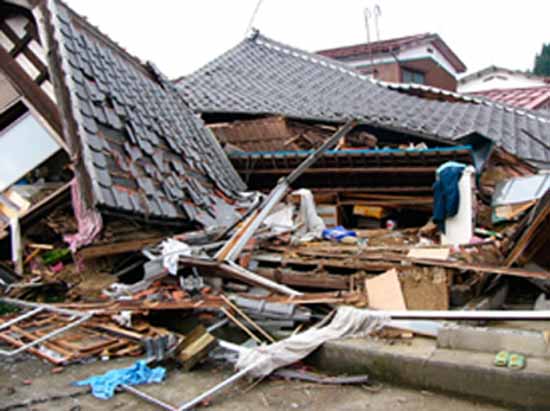
Australian opponents of nuclear power Sunday seized on the reactor accident triggered by Japan's huge earthquake as proof of the terrible danger of nuclear energy, despite its recent global "renaissance." 
A Japanese government spokesman said radioactive meltdowns may have occurred in two reactors at the Fukushima nuclear power plant in eastern Japan, which was badly hit by the 8.9-magnitude quake that hammered the area on Friday. The eyes of the world were anxiously locked on the unfolding emergency after a blast blew off the housing of one reactor after it overheated while a second was also overheating and at risk of exploding. The drama fuelled the arguments of ardent nuclear foes in Australia, which supplies much of the uranium used in the world's reactors, including to the company that runs the stricken Japanese reactors, campaigners said.

"The terrible human cost of the earthquake in Japan is being made even worse by radiation escaping from damaged nuclear reactors," said David Noonan of the non-profit environmental group, Australian Conservation Foundation (ACF).
"Nuclear is a high cost, high risk electricity option that has no place in a sustainable energy future," he said, accusing Australia of "fuelling trouble" by exporting uranium used in nuclear reactors.
Japanese officials were reportedly pumping in sea water to cool the overheating reactors, a move US experts described as an "act of desperation" that could foreshadow a Chernobyl-like disaster. Proponents of nuclear power as a cleaner alternative to coal-fired power stations have been given a major boost as many nations seek energy sources that emit fewer greenhouse gases that scientists say cause global warming. The decades-old debate over whether nations should rely more on nuclear power to feed growing electricity demand has been reignited in countries such as the United States, Germany and Australia as leaders struggle to limit emissions. Germany's parliament decided in 2009 to row back on plans to phase out nuclear power and to prolong its dependency on the energy source, prompting tens of thousands of activists to protest in Berlin on Saturday.
The debate is alive in the United States too, where 20 percent of electricity comes from nuclear power, although no new nuclear power plants have been built in around 30 years. Calls to replace smoke-billowing coal plants with cleaner atomic power stations have become more prominent in Australia, which has no nuclear power stations and where the current government opposes atomic energy at home. Australian Greens party leader Bob Brown said the accident in Japan is a reminder that nuclear energy is outside "the limits of human safeguards".
"It does raise real questions about the nuclear alternative, particularly for a sunny country like this where we don't need it. People don't want it," he told state broadcaster ABC .
Prime Minister Julia Gillard, from the centre left Labor Party, however refused to be drawn into the debate Sunday, saying now was not the time to reopen the debate. But Australia is home to 27 percent of the world's reserves of uranium, which fuels nuclear power plants, most of which is exported to the United States, France and Japan, and its last government supported nuclear power. Officials in Japan were desperately struggling to prevent the two uranium-fuelled reactors at the Fukushima No. 1 plant from melting down and releasing more radioactive material following smaller gas releases that sent locals to hospital.
"Australian uranium is bought and burned by the power company in Japan that runs that nuclear plant," the ACF's David Noonan told AFP. "When things go well we are left with the unresolved management of high-level, long-lived radioactive waste. When they go badly people are left with a disaster," he said.

Sunday, March 13, 2011

Japan’s quake threatens U.S. oil prices


Source : 24X7 Updates, by Eligna March 12,2011


As Japan’s earthquake slammed its extensive refining capacity, volatility in oil prices could further increase gasoline prices at American gas-pumps, predict industry experts. The 8.9 magnitude earthquake and the tsunami catastrophe has shattered Northern Japan’s automobile and steel factories, trapped thousands in workplaces, and finally battered the Asian and European financial markets.
 
But, analysts’ worldwide fear the most severe aftermath of Japan’s tremors could be the forthcoming skyrocketing oil prices, which could further hurt the steady global economic recovery. The tremor disaster has compelled the close down of the island nation‘s several oil refineries and nuclear power units. 

Japan’s quake threatens U.S. oil prices
Fuel analysts anticipate that if Japan’s oil refining facilities fail to revive promptly, the country’s demand for jet fuel, diesel and gasoline would surge tremendously. In the wake of arising situation in Japan, many global fuel suppliers, including major Californian refineries, could divert their consignments to Japan, as suppliers earn more profits from exporting fuels to other countries. If the anticipations turn correct, fuel analysts like James DiGeorgia, editor of the Gold & Energy Advisor feared a fuel crisis situation in U.S. DiGeorgia says "The sudden importation of large amounts of distilled products is expensive and it's a heavy logistics burden. That is going to drive up the market price for everything from diesel and gasoline to jet fuel." Sluggish U.S economy can’t bear oil volatility. As per the recent reports, Japan’s two major nuclear power plants are closed down, since the earthquake. The prolonged shutdown may spike fossil fuels demand, expects Bob van der Valk, a fuel-price specialist and consultant. Bob van der Valk, a consultant and fuel-price specialist, also said it can’t be denied that West Coast would amend for the fuel shortage owing to this shutdown.

The current sloppy U.S. economic recovery has tightened up the consumers’ purchasing power and at present Americans could not afford increased fuel prices. As indicated by AAA, the U.S. standard gasoline was $3.54 per gallon, witnessing a 7 cents hike since last week. While in California it stood at $3.94 per gallon. Oil prices volatility unlikely to resolve any sooner. Amid all speculations, crude oil futures slightly plunged to remain near $100 a barrel, on Friday. Due to Japan’s held up economy and disrupted refineries, global oil demand is likely to reduce to ease global petroleum supply, which was continually restrained by the mid-east and Libyan political crisis. But, as soon as Japan’s economy resurges, oil futures will start reflecting global commodity market. The situation makes oil price highly volatile, predict experts. Meanwhile, as fuel prices continue to affect U.S’s reeling economic growth, President Obama on Friday reassured Americans that his administration has been closely monitoring the fuel supply situations.

Obama asserted, "Here at home, everybody should know that should the situation demand it, we are prepared to tap the significant stockpile of oil that we have in the Strategic Petroleum Reserve,"