Welcome to a sustainable future, welcome to Kenergy Wind

Its the Cleanest energy you will ever invest in

Panchabuta-Renewable Energy & Cleantech in India

environmentalresearchweb: News

Sunday, March 13, 2011

Japan’s quake threatens U.S. oil prices


Source : 24X7 Updates, by Eligna March 12,2011
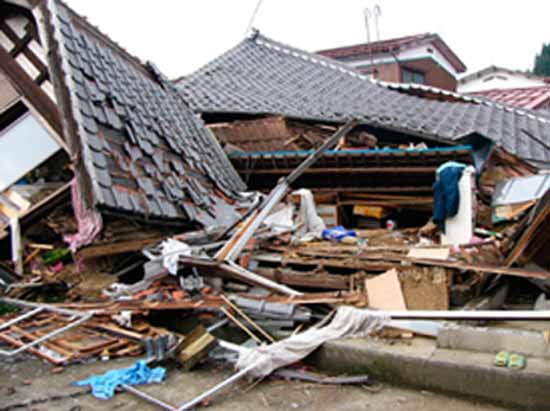

As Japan’s earthquake slammed its extensive refining capacity, volatility in oil prices could further increase gasoline prices at American gas-pumps, predict industry experts. The 8.9 magnitude earthquake and the tsunami catastrophe has shattered Northern Japan’s automobile and steel factories, trapped thousands in workplaces, and finally battered the Asian and European financial markets.
 
But, analysts’ worldwide fear the most severe aftermath of Japan’s tremors could be the forthcoming skyrocketing oil prices, which could further hurt the steady global economic recovery. The tremor disaster has compelled the close down of the island nation‘s several oil refineries and nuclear power units. 

Japan’s quake threatens U.S. oil prices
Fuel analysts anticipate that if Japan’s oil refining facilities fail to revive promptly, the country’s demand for jet fuel, diesel and gasoline would surge tremendously. In the wake of arising situation in Japan, many global fuel suppliers, including major Californian refineries, could divert their consignments to Japan, as suppliers earn more profits from exporting fuels to other countries. If the anticipations turn correct, fuel analysts like James DiGeorgia, editor of the Gold & Energy Advisor feared a fuel crisis situation in U.S. DiGeorgia says "The sudden importation of large amounts of distilled products is expensive and it's a heavy logistics burden. That is going to drive up the market price for everything from diesel and gasoline to jet fuel." Sluggish U.S economy can’t bear oil volatility. As per the recent reports, Japan’s two major nuclear power plants are closed down, since the earthquake. The prolonged shutdown may spike fossil fuels demand, expects Bob van der Valk, a fuel-price specialist and consultant. Bob van der Valk, a consultant and fuel-price specialist, also said it can’t be denied that West Coast would amend for the fuel shortage owing to this shutdown.

The current sloppy U.S. economic recovery has tightened up the consumers’ purchasing power and at present Americans could not afford increased fuel prices. As indicated by AAA, the U.S. standard gasoline was $3.54 per gallon, witnessing a 7 cents hike since last week. While in California it stood at $3.94 per gallon. Oil prices volatility unlikely to resolve any sooner. Amid all speculations, crude oil futures slightly plunged to remain near $100 a barrel, on Friday. Due to Japan’s held up economy and disrupted refineries, global oil demand is likely to reduce to ease global petroleum supply, which was continually restrained by the mid-east and Libyan political crisis. But, as soon as Japan’s economy resurges, oil futures will start reflecting global commodity market. The situation makes oil price highly volatile, predict experts. Meanwhile, as fuel prices continue to affect U.S’s reeling economic growth, President Obama on Friday reassured Americans that his administration has been closely monitoring the fuel supply situations.

Obama asserted, "Here at home, everybody should know that should the situation demand it, we are prepared to tap the significant stockpile of oil that we have in the Strategic Petroleum Reserve,"

Monday, February 28, 2011

Visit of CMAX(CNBM International) to Kalima Capital


Officials from CNBM visited Kalima Capital on 21-Feb-2011. Both the Ministry of Power and Ministry of New and Renewable Energy (MNRE) actively putting policies in place for the development of the solar energy sector in India, the sector is attracting different players from across the world. That was   quite visible in the 3rd  RenewTech fair at Mumbai during 17th – 19th Feb. 

Today China produces between one-third and one-half of the world’s total supply of photovoltaic solar cells. With the Chinese manufacturers leading the race in manufacturing of solar panels and modules, most of it is shipped overseas to markets like Germany, Denmark and Spain. CNBM has worked in setting up solar plants across different countries in Europe.


CNBM officials provided an overview of their international operations and their plans about increasing presence in India in Clean Technology sector. With already an office registered in Hyderabad, CNBM is looking for expanding their office network across India. CNBM is actively engaged with different construction and real estate companies in India for selling construction equipments.


Kalima Capital on its part also provided its outlook on the renewable energy sector in India both in wind and solar energy. With the organisation’s core competencies in financing of renewable energy project, the CNBM officials were briefed on policy issues both in the power and renewable energy sector. The CNBM team also discussed about the various prospect of long term financing of renewable energy projects in India.


The meeting ended on a positive note with both the companies identifying common grounds on which a long term sustainable relationship can be developed. With Kalima Capital deeply committed in the development of renewable energy sector in the region, CNBM’s officials showed confidence in working with Kalima Capital for meeting their business objectives.  

Thursday, February 24, 2011

Wind turbine manufacturing to exceed demand by 58% in 2012


 If some industry analyst of London are to believed the wind turbine manufacturing capacity is to exceed demand by 58%. The Bloomberg article  provides an interesting overview of companies who are only into manufacturing of Wind Turbines. As the wind turbine cost remains the most important factor for making any power project to be attractive for investors, it needs to be seen if the surplus capacity will lead to increase in production of power from wind energy projects at a time when financial institutions are taking a conservative approach in some countries over extending debt to such projects.

Thursday, February 3, 2011

Kissa "Open Access" ka

Though the one-day session hosted by IPPAI was named "Consumer Issues in Power" but the whole day had discussions more on the topic of Open Access in Maharashtra. The session was attended by representative from the state electricity regulator, state and private discom and transco, IPPs and EPC contractor.


 Increase in power prices have an impact on companies that are power intensive and who are already grappling with increase in prices of other raw materials. With prices in both the power exchanges falling steeply it becomes all the more salivating for companies to opt for open access. That makes business sense also. But why are the companies not doing so. Even the Electricity Act 2003 enables to do so. The problem lies in the words "but" and "if" that are part of the Act. The Electricity Act allows the SERC(State Electricity Regulatory Commission) to implement open access when the SERC thinks that it will not lead to unhealthy competition and financial(monopolistic) loss to the exchequer.

The Industry Association also provided their view on the subject. The Association also showed how Open Access will benefit the State Electricity Companies,something which NASSCOM does, regularly, to show how America benefited from outsourcing. It was not only the private sector companies(consumers) that had expressed their views. Even there was participation by government companies and one of them was the largest consumer of Electricity, the Indian Railways.

The State Load Despatch Center (SLDC) also has its limitation on implementing open access. Already the SLDC is not able to tackle the congestion management problem that arise due to collective transactions happening through the Power Exchanges. The infrastructure for Load Management is well geared for long term bilateral contracts but yet to  prepare for short term contracts which will increase if Open Access becomes a reality.

Open Access can be smoothly implemented with usage of modern tools available with us. Using forecasting tools and with availability of historical data, many of the uncertainties about supply and demand can be dispelled. What was missing in the discussion was innovation. Power sector in India has complex problems. Difficult problems call for better innovation. With modern day analytical tools solution can be found for the problems. Delaying implementation of Open Access can not be panacea for the Government. The Regulatory Commission can remain flexible till the policy is properly implemented but that should not give rise to sudden jerks which will become nightmare for the customers, IPPs, investors and the society at large. 

Monday, January 3, 2011

Can’t erase state power firms’ losses at one go !!

The article in the business daily, LiveMint, provides the quantum of losses of state distribution companies and its impact on achieving the target for power generation set up in the 11th plan.

Are Wind Turbine manufacturers going the Henry Ford way ?

The article  in New York Times speaks about how established power equipment manufacturing company like Siemens which is into other businesses also think about the wind energy sector.